More Than CBD: How the Whole Hemp Plant Works Together to Deliver Better Results
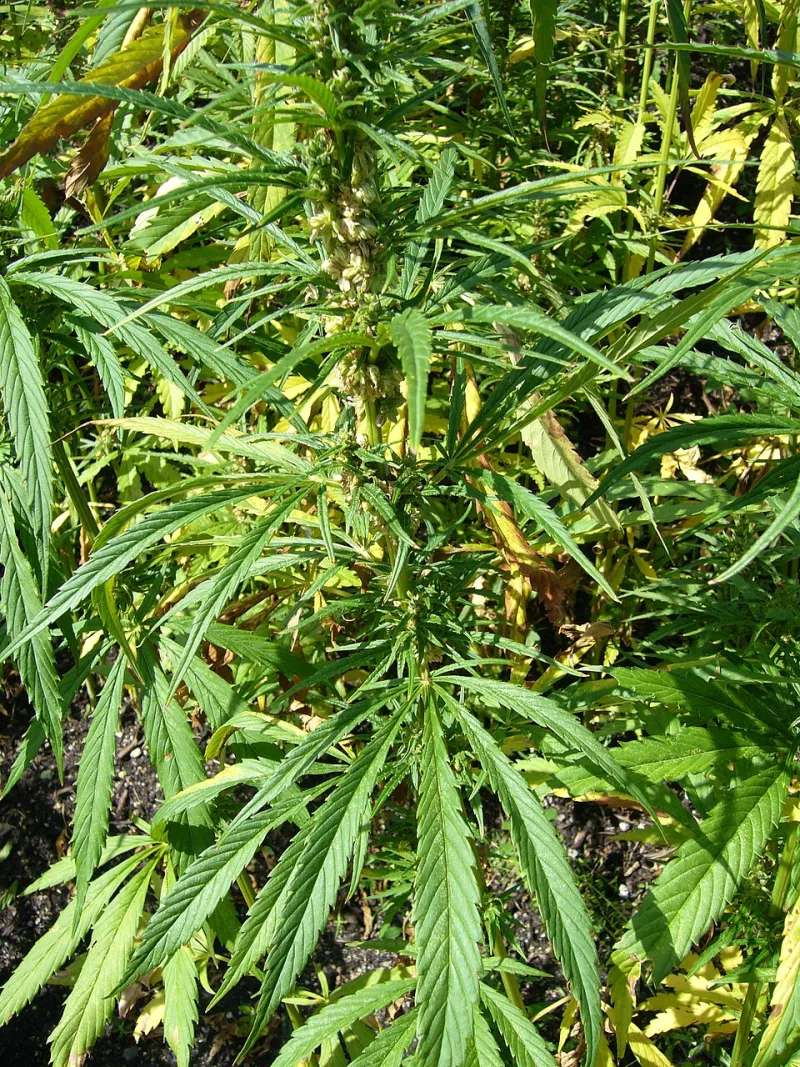
Photo: Nabokov, Public domain, via Wikimedia Commons
Walk into any wellness shop or scroll through enough Instagram ads and you'll see the word "CBD" plastered on everything from gummies to dog treats. But here's something the label doesn't always tell you: the type of CBD inside that product can make a massive difference in how it actually performs.
Full-spectrum. Broad-spectrum. Isolate. These aren't just marketing buzzwords — they describe fundamentally different versions of the same plant compound, processed in very different ways. And if you've ever wondered why one CBD gummy left you underwhelmed while another seemed to genuinely take the edge off, the answer might live in this distinction.
The Hemp Plant Is More Than Just CBD
Cannabis sativa — the hemp variety grown legally across the US — is a remarkably complex plant. Researchers have identified over 100 individual cannabinoids within its structure, along with a rich library of aromatic compounds called terpenes. You've heard of CBD and THC, obviously. But there's also CBG (cannabigerol), CBN (cannabinol), CBC (cannabichromene), and dozens of others, each with its own potential interactions with the human body.
Terpenes, meanwhile, are the molecules responsible for the plant's smell and flavor — the piney, citrusy, earthy notes you might notice in a quality hemp product. But they do more than just make things smell nice. Research suggests terpenes like myrcene, linalool, and beta-caryophyllene may interact with receptors in the body in ways that complement cannabinoid activity.
All of these compounds coexist in the living hemp plant. What happens to them during extraction is where the story really begins.
What Extraction Actually Does to Your CBD
When hemp is processed into a usable extract, manufacturers have choices. They can pull out everything — every cannabinoid, every terpene, every trace of plant matter — and keep it largely intact. That's a full-spectrum extract. It contains the complete chemical profile of the plant, including trace amounts of THC (federally legal hemp is capped at 0.3% THC by dry weight).
Or they can take that full-spectrum extract and run it through additional processing to remove the THC specifically, while preserving the rest of the cannabinoid and terpene profile. That's broad-spectrum. It's the middle-ground option, popular with people who want to avoid THC entirely but still benefit from the plant's broader chemistry.
Then there's CBD isolate — the most processed form. Here, every compound except pure CBD is stripped away, leaving a crystalline powder that is, chemically speaking, CBD and nothing else. It has no smell, no flavor, and no other cannabinoids. It's also the cheapest form to produce at industrial scale.
The Entourage Effect: When the Whole Beats the Sum of Its Parts
Here's where things get genuinely interesting. In 1998, Israeli researchers Raphael Mechoulam and Shimon Ben-Shabat introduced a concept they called the "entourage effect" — the idea that cannabinoids and terpenes don't just work independently inside the body, but actually influence and amplify each other's activity.
Think of it like a band versus a solo act. A single instrument can carry a melody, but add the rest of the ensemble and suddenly you've got something richer, more dynamic, and more resonant. That's roughly what researchers believe happens when the full spectrum of hemp compounds enters your system together.
A widely cited 2011 paper by neurologist Ethan Russo expanded on this, exploring how specific terpene-cannabinoid combinations might address different conditions more effectively than isolated compounds alone. For example, CBD paired with the terpene linalool (also found in lavender) may support relaxation more effectively than CBD in isolation. CBG may enhance CBD's interaction with certain receptors. The interplay is nuanced, and science is still mapping it — but the early evidence is compelling enough that it's reshaped how serious formulators approach their products.
For everyday consumers, this translates to a practical question: are you getting the full band, or just the lead singer?
Why Growing Conditions Change Everything
Here's something that often gets lost in the label conversation: even if a manufacturer wants to produce a genuinely full-spectrum product, they can only work with what the plant gives them. And the plant gives you what the soil, altitude, and farming practices allow.
Colorado's Front Range has developed a reputation in hemp cultivation circles for good reason. The combination of high altitude, intense UV exposure, low humidity, and mineral-rich Rocky Mountain soil creates growing conditions that push hemp plants to produce more robust terpene and cannabinoid profiles. Plants under environmental stress tend to generate more of these protective compounds — it's essentially the plant's defense mechanism, and it works in the consumer's favor.
Small-batch, craft-style cultivation — the kind that prioritizes soil health and plant-specific attention over maximum yield per acre — tends to preserve these delicate compounds better than commodity-scale industrial farming. Terpenes in particular are volatile; they degrade with heat, rough handling, and time. A plant harvested and processed thoughtfully, close to where it was grown, is more likely to deliver a terpene profile worth keeping.
That's a core reason why we at Denver Farms CBD emphasize local, Colorado-grown hemp in everything we produce. The Rocky Mountain origin isn't just a branding detail — it reflects a genuine difference in what ends up in your gummy.
So Which Type Should You Choose?
For most people exploring CBD for general wellness — stress, sleep, recovery — full-spectrum is worth considering first, assuming you're comfortable with trace THC levels and there's no professional or legal reason to avoid them. The broader chemical profile gives your body more to work with.
Broad-spectrum is a solid alternative if THC is a concern. You lose a piece of the entourage, but you retain more than isolate offers.
Isolate has its place — it's predictable, flavorless, and easy to dose precisely. For people who are highly sensitive to other cannabinoids, or who need to be absolutely certain of zero THC exposure, it's a legitimate choice. Just go in understanding that you're working with a narrower tool.
Whatever you choose, read the label carefully. Look for products backed by third-party certificates of analysis (COAs) that show the full cannabinoid breakdown — not just total CBD content. A quality COA will confirm whether terpenes are present, whether THC is within legal limits, and whether the product is free of pesticides and heavy metals.
The Takeaway
CBD isolate isn't a scam, and full-spectrum isn't magic. But understanding the difference between these product types puts you in a much better position to find something that actually works for your body and your goals. The hemp plant spent millions of years developing a sophisticated internal chemistry — and the best CBD products respect that complexity rather than engineering it away.
At Denver Farms CBD, we think the plant deserves to be treated as the whole, remarkable thing it is. That starts in the soil, carries through the extraction process, and shows up in every gummy we make.