When the Lab Says One Thing and Your Body Says Another: The Hidden Gap in CBD Testing
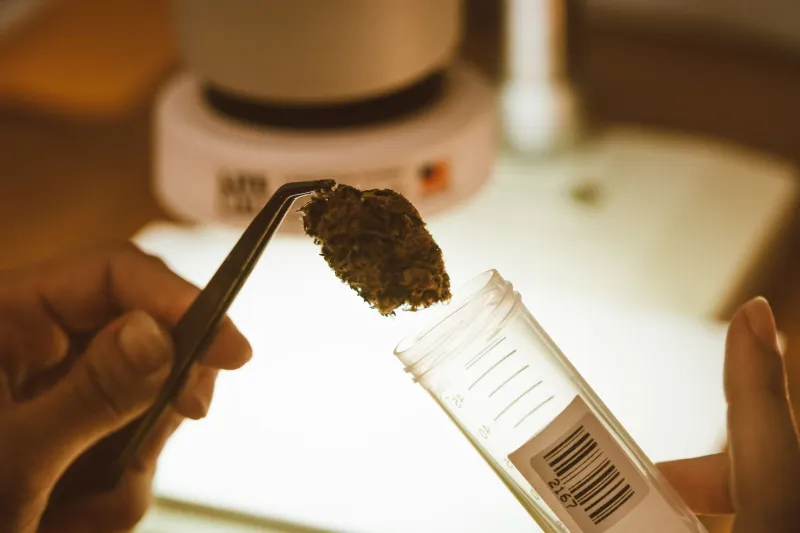
You did everything right. You checked the certificate of analysis, confirmed the CBD milligrams, verified the THC was under 0.3%, and even looked up the testing lab. The numbers looked solid. So why did your friend take the same gummy and feel noticeably more relaxed while you felt... basically nothing?
This is one of the most common frustrations in the CBD world, and honestly, it doesn't get talked about enough. Lab results are important — genuinely important — but they only tell part of the story. Understanding the gap between what a lab report shows and what actually happens inside your body can save you a lot of confusion, money, and second-guessing.
What a Certificate of Analysis Actually Measures
A third-party certificate of analysis (COA) is the gold standard for CBD product transparency. A reputable lab will test for cannabinoid potency, confirm the absence of pesticides, check for heavy metals, and screen for residual solvents. That's real, valuable information and you should absolutely look for it before buying anything.
But here's what a COA doesn't measure: you.
Lab testing tells you what's in the gummy. It says nothing about how much of that CBD your body will actually absorb, how quickly it'll move through your system, or how your individual endocannabinoid receptors will respond to it. Those are biological variables, and no amount of chromatography equipment can capture them.
Think of it like reading a nutrition label on a piece of fruit. The label might say 14 grams of sugar and 3 grams of fiber. But how that fruit affects your blood sugar, your digestion, your energy — that depends entirely on your metabolism, your gut microbiome, what else you've eaten that day, and dozens of other personal factors. CBD is no different.
The Absorption Problem Nobody Talks About Enough
One of the biggest variables between lab results and lived experience is bioavailability — the percentage of a compound that actually makes it into your bloodstream and reaches active tissue.
When you eat a CBD gummy, it has to survive your digestive system before it does anything useful. That means stomach acid, liver metabolism (what pharmacologists call the "first-pass effect"), and a whole gastrointestinal journey before CBD molecules reach your bloodstream. Depending on a person's gut health, liver enzyme activity, and even the specific fat content of what they've recently eaten, absorption rates can vary wildly.
Some estimates put oral CBD bioavailability anywhere between 6% and 20%. That's a massive range. Two people could take the exact same 25mg gummy, and one person's body might effectively process 5mg of active CBD while the other processes closer to 15mg. The lab result says 25mg for both of them. Their experiences will tell a very different story.
Your Endocannabinoid System Has Its Own Personality
Here's something that surprises a lot of people: your endocannabinoid system (ECS) isn't a fixed, standardized piece of biological hardware. It's more like a fingerprint — unique to you, shaped by genetics, lifestyle, stress levels, sleep patterns, and even your history with cannabis or hemp products.
The ECS is the network of receptors (primarily CB1 and CB2) that CBD interacts with throughout your body. Some people have naturally higher concentrations of these receptors. Some have genetic variants that affect how efficiently those receptors bind to cannabinoids. Some people's bodies produce more of their own endocannabinoids naturally, which can influence how dramatically they respond to external cannabinoids from hemp.
This is why the same lab-verified gummy can make one person feel like they finally hit a reset button while another person shrugs and says they didn't notice much. Neither person is wrong. Their endocannabinoid systems are just wired differently.
What Current Testing Methods Can't Capture
Lab testing has come a long way, especially here in Colorado where regulatory pressure has pushed hemp producers to maintain high standards. But even the most sophisticated COA has blind spots.
For one, most testing measures cannabinoid content at a single point in time — usually shortly after production. It doesn't account for how a gummy's potency might shift over months of sitting in a warehouse or on a shelf. Heat, light, and oxygen all degrade cannabinoids, and that degradation isn't linear or predictable.
Testing also typically measures total cannabinoid content, not how those cannabinoids are bound within the gummy's matrix. A CBD molecule suspended in a water-soluble nano-emulsion behaves very differently in your body than one locked inside a standard oil-based gummy. Both might show 25mg on a COA, but the nano-emulsified version could absorb significantly faster and more completely. The lab report looks identical. The experience doesn't.
Then there's the question of minor cannabinoids and terpenes. Full-spectrum hemp contains dozens of compounds beyond CBD — CBG, CBN, CBC, trace THC, and a complex mix of terpenes. These compounds interact with each other and with your ECS in ways that are genuinely difficult to quantify. A COA might list the major players, but it can't fully map the synergistic dance happening once those compounds hit your system.
So What Should You Actually Pay Attention To?
None of this means lab testing is useless — far from it. A COA is still your first line of defense against mislabeled or contaminated products. Always check it. Always verify the testing lab is accredited and independent.
But beyond the basics, here are some things worth paying attention to that a lab report won't tell you:
Formulation matters. Look for transparency about how the CBD is delivered — is it nano-emulsified? Oil-based? What carrier fats are used? These details affect absorption more than most people realize.
Timing and context. Taking a gummy on an empty stomach versus after a fatty meal can meaningfully change how much CBD you absorb. Your stress levels, sleep quality, and hydration on any given day also influence your ECS responsiveness.
Consistency over single doses. Many people find that CBD's effects build gradually over weeks of consistent use rather than hitting dramatically on day one. If one gummy didn't do much, that's not necessarily the final answer.
Your own tracking. A simple journal — noting the dose, time of day, what you'd eaten, your stress level, and what you noticed — can reveal patterns that no lab can predict for you.
The Bigger Picture
At Denver Farms CBD, we think transparency matters — which is why we talk openly about both what lab testing can and can't tell you. The Rocky Mountain hemp tradition is built on quality and honesty, and part of that honesty is acknowledging that wellness isn't a one-size-fits-all equation.
A COA is a starting point, not a finish line. Your real-world experience is data too — maybe the most important data of all. Learning to read both the lab report and your own body's signals is where the real CBD education begins.