What a Colorado Hemp Farmer Sees When He Flips Your Gummy Jar Over

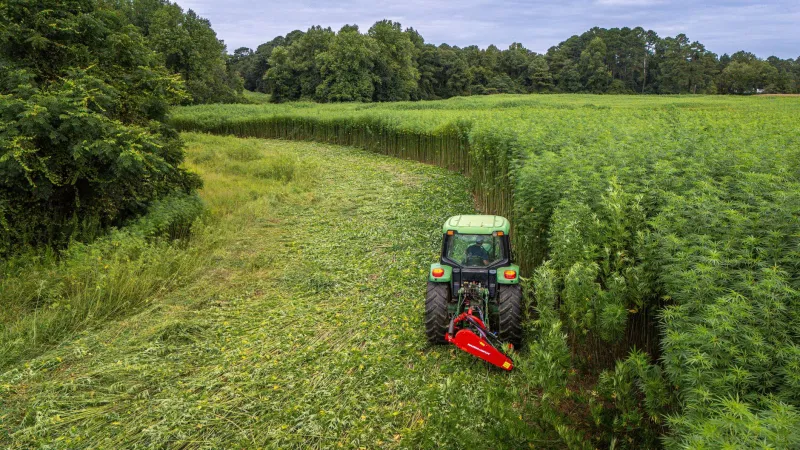
Photo: John Robert McPherson, CC0, via Wikimedia Commons
Spend enough time around Denver's hemp scene and you start to notice something: the folks who've been in this industry longest barely glance at the front of the package. All the real information lives on the back panel, the batch number, and the certificate of analysis hiding behind a QR code. If you want to shop like someone who actually knows this plant, here's what they check — in order.
Start With the COA, Not the Marketing
Every reputable CBD gummy should link to a Certificate of Analysis from an independent, third-party lab. This isn't a bonus feature; it's the baseline. The COA tells you three things the label can't: whether the cannabinoid content matches the claim, whether the product falls under the 0.3% delta-9 THC federal limit, and whether anything unwanted — pesticides, heavy metals, residual solvents — showed up in testing.
Here's the insider move: don't just confirm that a COA exists. Match the batch number on the lab report to the batch number printed on your jar. A generic lab result that could belong to any batch is a yellow flag. A batch-specific report is the gold standard.
Decode the Spectrum Language
Three terms dominate this corner of the label, and they matter more than most shoppers realize:
- Full-spectrum means the extract carries the whole range of hemp compounds — cannabinoids, terpenes, flavonoids — working together in what researchers call the entourage effect.
- Broad-spectrum keeps much of that plant profile but strips the THC out, a common choice for people subject to workplace drug testing.
- CBD isolate is pure cannabidiol and nothing else. Clean, predictable, and missing the supporting cast.
None of these is universally "best." But a label that's vague about which one you're getting? That's a product hoping you won't ask.
Check Where the Hemp Actually Grew
Colorado's high-altitude growing conditions — intense sunlight, big day-night temperature swings, low humidity — have made it one of the country's premier hemp regions, which is partly why Denver became a processing and formulation hub. Sourcing matters because hemp is a bioaccumulator: it pulls whatever's in the soil, good and bad, straight into the plant.
A label that names its farm or growing region is a label with nothing to hide. "Made with USA-grown hemp" is fine. "Grown in Colorado's San Luis Valley by [named farm]" is better.
Extraction Method: The Detail Most Shoppers Skip
Scroll further down the fine print and you'll find how the CBD was pulled from the plant. CO2 extraction uses pressurized carbon dioxide and is widely considered the cleanest method. Ethanol extraction is also legitimate and common. What you don't want to see is anything suggesting cheap hydrocarbon methods without solvent testing to back it up — which is exactly why that COA from step one matters so much.
Do the Per-Gummy Math
One last habit worth stealing from the pros: divide the price by the total milligrams of CBD in the bottle, not by the gummy count. A 25mg gummy at a fair price can beat a 5mg gummy that looks cheap on the shelf. This single calculation filters out a surprising amount of clever packaging.
The Denver Takeaway
Colorado farmers will tell you the hemp industry grew up fast, and regulation is still catching up. Until it does, the label — and the lab report behind it — is your best protection. Read it like someone whose livelihood depends on knowing the difference, because in a very real sense, your wellness budget does.