Why Colorado's Mountains Make Better Hemp: The Science of Growing at Altitude
Wine lovers already understand this concept intuitively. Ask any sommelier why a Napa Cabernet tastes different from one grown in Bordeaux, and they'll talk your ear off about terroir — the French idea that a plant carries the fingerprint of the land where it was raised. Soil chemistry, rainfall patterns, temperature swings, elevation. All of it ends up in the glass.
Hemp works the same way. And if terroir matters anywhere in American cannabis agriculture, it matters most in Colorado.
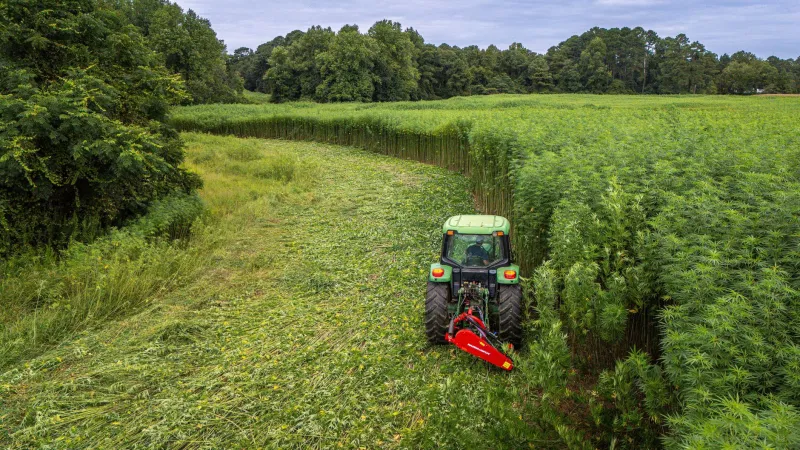
We're not just saying that because Denver is home. The geographic conditions across this state — particularly along the Front Range and into the high valleys — create a growing environment that pushes hemp plants to produce richer, more complex cannabinoid profiles than farms operating at sea level in gentler climates. Let's break down exactly why.
The Altitude Advantage: Stress as a Feature, Not a Bug
Colorado sits at serious elevation. Denver clocks in around 5,280 feet — the famous Mile High — but many of the state's agricultural zones push well above that. At altitude, the atmosphere is thinner, which means two things happen that directly affect hemp plants.
First, UV radiation intensity increases. For every 1,000 feet of elevation gain, UV exposure rises by roughly 10 to 12 percent. That might sound like a minor detail, but for hemp, it's significant. Plants respond to elevated UV stress by ramping up production of protective compounds — including cannabinoids and terpenes. Think of it as the plant building sunscreen from the inside out. The result is higher concentrations of the very compounds we're after.
Second, cooler nighttime temperatures at altitude slow the plant's metabolic processes after sunset, which helps preserve those cannabinoids rather than letting them degrade in overnight warmth. The wide temperature differential between Colorado days and nights — sometimes 30 to 40 degrees in a single 24-hour cycle — is actually a gift to hemp farmers who know how to work with it.
What Colorado Soil Brings to the Table
The Rocky Mountains are geologically young by Earth's standards, and that youth shows up in the soil. Colorado's agricultural regions benefit from soils with diverse mineral compositions — calcium, magnesium, iron, and trace elements — that have been ground down from ancient granite and sandstone formations over millennia.
Minerals aren't just background noise for plant growth. They're functional inputs. Magnesium, for example, is central to chlorophyll production and photosynthesis efficiency. Calcium supports cell wall integrity. Iron plays a role in enzyme function throughout the plant. When hemp grows in mineral-rich, well-draining soil, it builds a stronger internal structure and, research suggests, produces a more complete cannabinoid and terpene profile as a result.
Colorado's semi-arid climate also naturally limits some of the fungal pressures that plague hemp growers in more humid states. Less moisture in the air means lower risk of mold and mildew, which translates to cleaner harvests and less need for intervention during the growing cycle.
Rocky Mountain Water: The Overlooked Input
Irrigation source matters more than most people realize. Much of Colorado's agricultural water originates as snowpack in the Rockies — it melts slowly through spring and early summer, filtering through granite and limestone before it ever reaches a farm.
That filtration process does something interesting. It strips out many of the contaminants and chemical residues that show up in surface water or municipal supplies, while simultaneously picking up trace minerals from the rock it passes through. The result is irrigation water that's genuinely cleaner and more mineral-balanced than what's available in most other growing regions.
For hemp, which is notoriously good at absorbing whatever's in the soil and water around it (a trait called hyperaccumulation), this matters enormously. Clean inputs produce cleaner plants. And cleaner plants mean fewer concerns when it comes time for third-party lab testing.
How Environment Shapes the Cannabinoid Profile
Here's where it all comes together. The cannabinoid profile of a hemp plant — the ratio of CBD to CBG to CBC to minor cannabinoids, plus the terpene composition — isn't just a function of genetics. Genetics set the ceiling, but environment determines how close the plant gets to reaching it.
Colorado's combination of high UV exposure, dramatic temperature cycling, mineral-dense soil, and clean mountain water creates a consistent set of stressors and inputs that push hemp plants toward fuller expression of their chemical potential. Farmers who have grown the same cultivar in Colorado and in lower-elevation states have documented measurable differences in cannabinoid density and terpene richness — with Colorado crops routinely coming out ahead.
This is the same principle that makes high-altitude coffee from Ethiopia or Peru taste more complex than commodity beans grown at sea level. Environmental pressure, when it falls within the plant's tolerance range, tends to produce more interesting and more potent results.
The Denver Farms Perspective on Sourcing
When we talk about Rocky Mountain roots at Denver Farms CBD, this is what we mean in practice. We're not using geography as a marketing slogan. We're pointing to a set of real, documentable growing conditions that make Colorado hemp genuinely different from what's grown elsewhere.
Our sourcing philosophy centers on working with farms that understand and leverage these environmental advantages — farms where growers track soil composition, monitor UV conditions, and harvest at the right moment to capture peak cannabinoid development. It's agricultural craft applied to hemp, and it shows up in the final product.
Every batch of gummies we put our name on starts with hemp that was grown in conditions built by millions of years of geology and refined by the specific rhythms of Colorado seasons. You can't manufacture that in a warehouse in New Jersey. You can't replicate it on flatlands in the Southeast, no matter how advanced the agricultural technology.
Why This Should Matter to You as a Consumer
If you're investing in CBD gummies for genuine wellness reasons — sleep, stress, recovery, everyday balance — then the quality of the hemp underneath everything else is the foundation. A well-formulated gummy made from mediocre hemp is still a mediocre gummy.
Asking where your hemp was grown, and understanding what those growing conditions actually mean for the plant, is one of the smarter moves you can make as an informed buyer. Terroir isn't just a wine concept. It's a real agricultural phenomenon that shows up in test results, in terpene richness, and ultimately in how a product performs for the person taking it.
Colorado's mountains didn't just give Denver a cool skyline. They created one of the best natural environments on the planet for growing high-quality hemp. That's not an accident — and it's not just good branding. It's geography doing what geography does best.